TU WEIN PRESENTATION-:
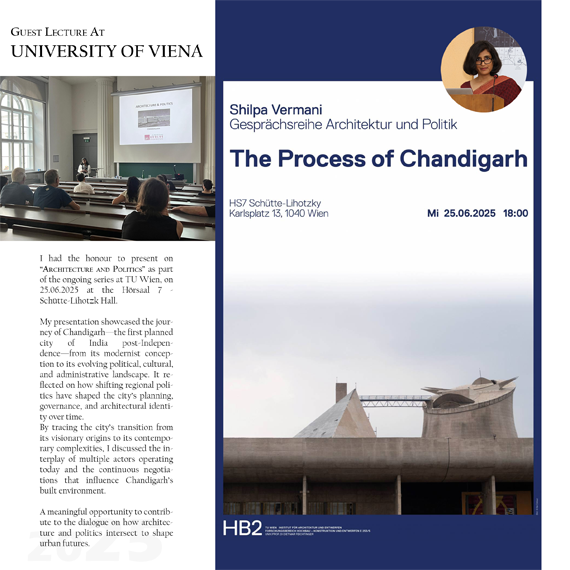
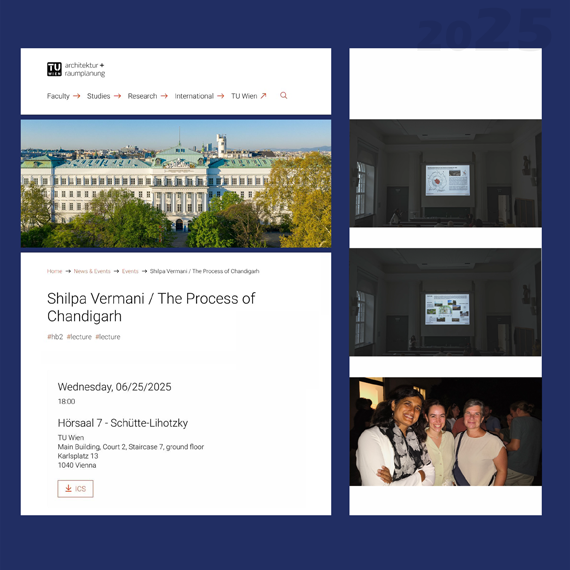
I had the honour to present on “Architecture and Politics” as part of
the ongoing series at TU Wien, on 25.06.2025 at the Hörsaal 7 -
Schütte-Lihotzk Hall.
My presentation showcased the journey of Chandigarh—the first planned
city of India post-Independence—from its modernist conception to its
evolving political, cultural, and administrative landscape. It reflected
on how shifting regional politics have shaped the city’s planning,
governance, and architectural identity over time.
By tracing the city’s transition from its visionary origins to its
contemporary complexities, I discussed the interplay of multiple actors
operating today and the continuous negotiations that influence
Chandigarh’s built environment.
A meaningful opportunity to contribute to the dialogue on how
architecture and politics intersect to shape urban futures.
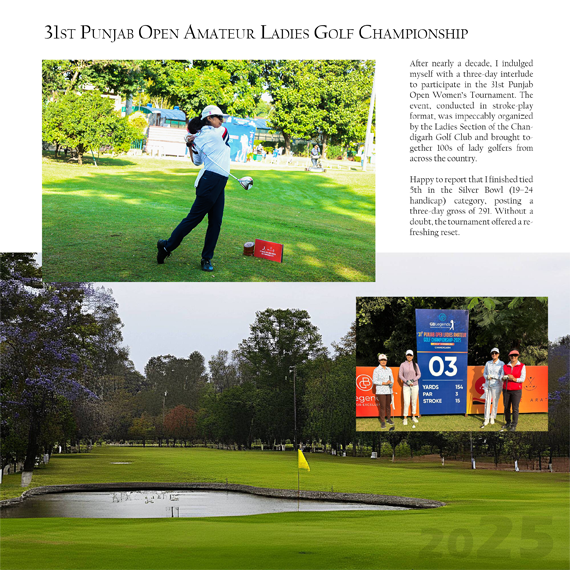
31st Punjab Open Amateur Ladies Golf Championship
After nearly a decade, I indulged myself with a three-day interlude to
participate in the 31st Punjab Open Women’s Tournament. The event,
conducted in stroke-play format, was impeccably organized by the Ladies
Section of the Chandigarh Golf Club and brought together 100 lady
golfers from across the country
Happy to report that I finished tied 5th in the Silver Bowl (19–24
handicap) category, posting a three-day gross of 291. Without a doubt,
the tournament offered a refreshing reset.
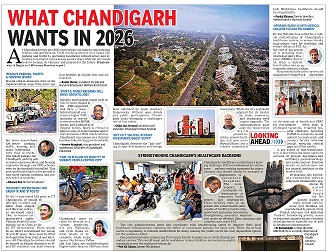
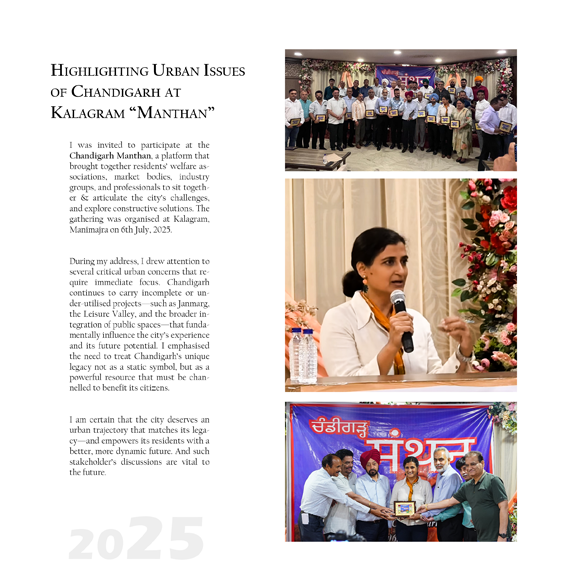
Kalagram “Baithak” for Chandigarh “Manthan”
I was invited to participate at the Chandigarh Manthan, a platform that
brought together residents’ welfare associations, market bodies,
industry groups, and professionals to sit together & articulate the
city’s challenges, and explore constructive solutions. The gathering was
organised at Kalagram, Manimajra on 6th July, 2025.
During my address, I drew attention to several critical urban concerns
that require immediate focus. Chandigarh continues to carry incomplete
or under-utilised projects—such as Janmarg, the Leisure Valley, and the
broader integration of public spaces—that fundamentally influence the
city’s experience and its future potential. I emphasised the need to
treat Chandigarh’s unique legacy not as a static symbol, but as a
powerful resource that must be channelled to benefit its citizens.
I am certain that the city deserves an urban trajectory that matches its
legacy—and empowers its residents with a better, more dynamic future.
And such stakeholder’s discussions are vital to the future.
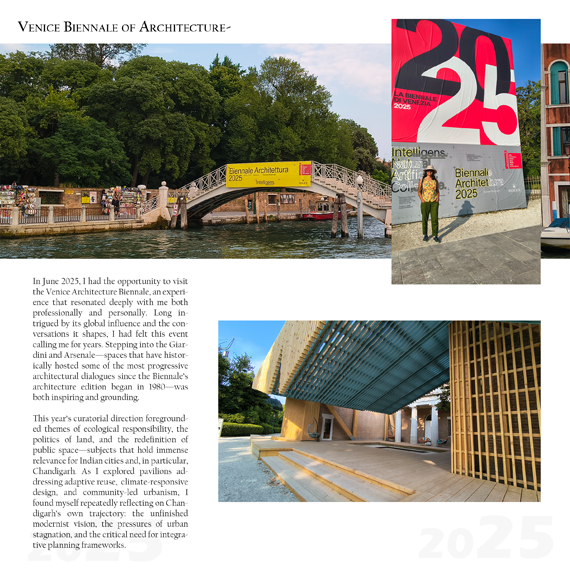
Venice Biennale of Architecture-
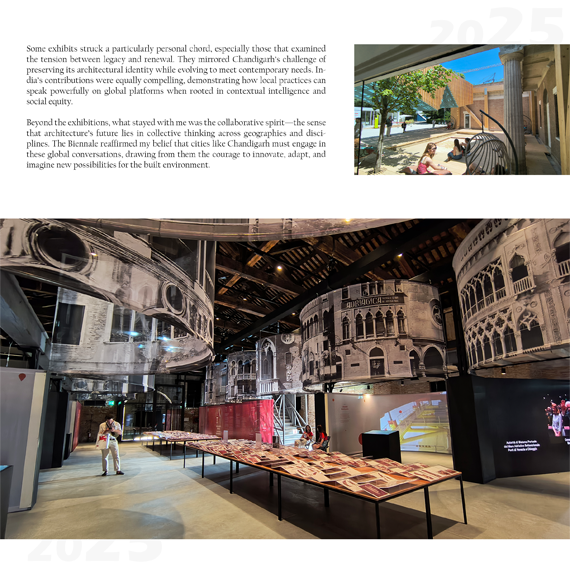
In June 2025, I had the opportunity to visit the Venice Architecture
Biennale, an experience that resonated deeply with me both
professionally and personally. Long intrigued by its global influence
and the conversations it shapes, I had felt this event calling me for
years. Stepping into the Giardini and Arsenale—spaces that have
historically hosted some of the most progressive architectural dialogues
since the Biennale’s architecture edition began in 1980—was both
inspiring and grounding.
This year’s curatorial direction foregrounded themes of ecological
responsibility, the politics of land, and the redefinition of public
space—subjects that hold immense relevance for Indian cities and, in
particular, Chandigarh. As I explored pavilions addressing adaptive
reuse, climate-responsive design, and community-led urbanism, I found
myself repeatedly reflecting on Chandigarh’s own trajectory: the
unfinished modernist vision, the pressures of urban stagnation, and the
critical need for integrative planning frameworks.
Some exhibits struck a particularly personal chord, especially those
that examined the tension between legacy and renewal. They mirrored
Chandigarh’s challenge of preserving its architectural identity while
evolving to meet contemporary needs. India’s contributions were equally
compelling, demonstrating how local practices can speak powerfully on
global platforms when rooted in contextual intelligence and social
equity.
Beyond the exhibitions, what stayed with me was the collaborative
spirit—the sense that architecture’s future lies in collective thinking
across geographies and disciplines. The Biennale reaffirmed my belief
that cities like Chandigarh must engage in these global conversations,
drawing from them the courage to innovate, adapt, and imagine new
possibilities for the built environment.
2025