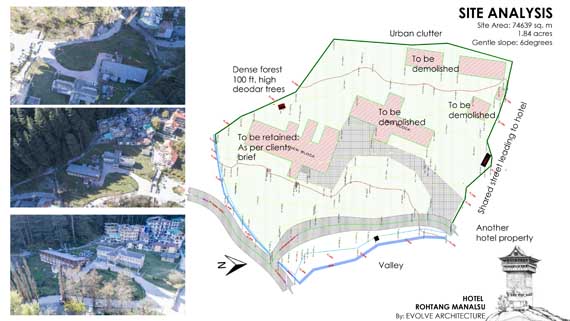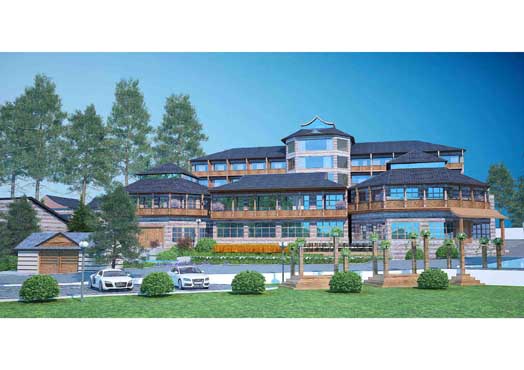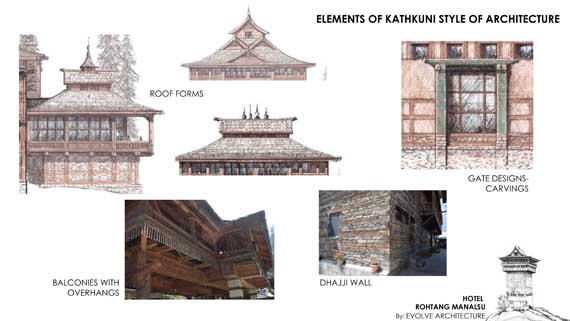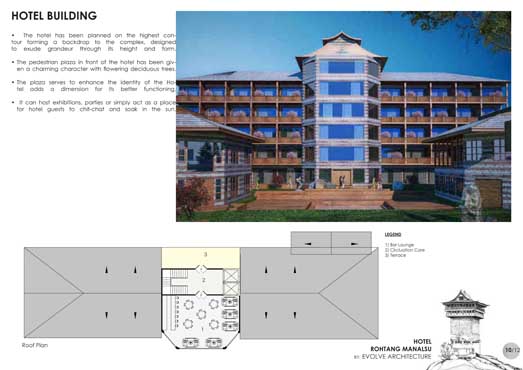
The Wellness Resort at Manali is conceived as a serene retreat that integrates architecture, landscape, and holistic healing within the sensitive Himalayan environment. Located amidst dense deodar forests on a gently sloping site, the project responds carefully to its natural context, preserving existing features while enhancing the experiential quality of the place. The design is rooted in the principles of traditional Kathkuni architecture, reinterpreted through a contemporary lens to create a resort that feels both grounded and timeless.
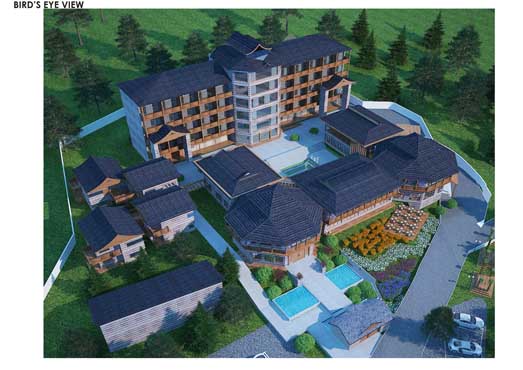
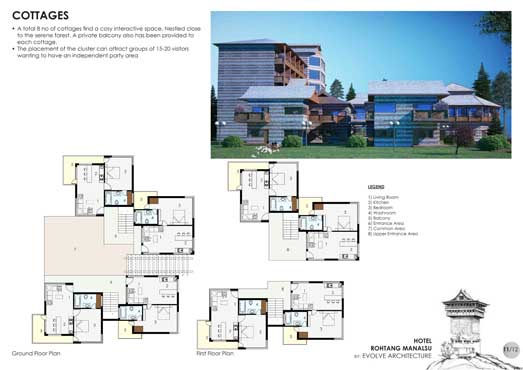
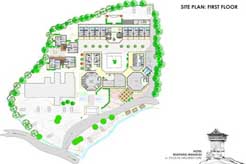
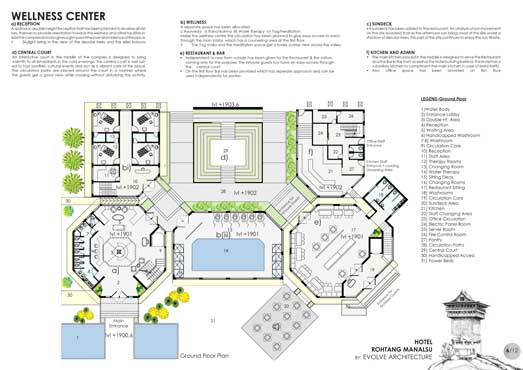
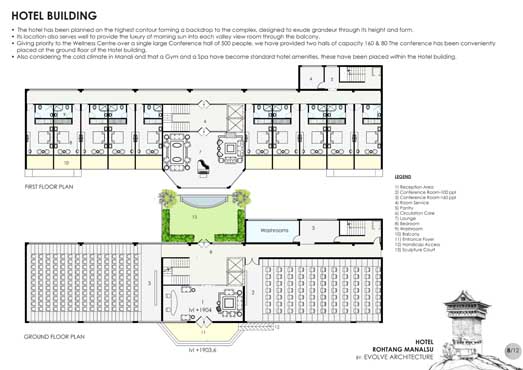
The master plan organizes the complex into clearly defined yet interconnected zones comprising the wellness centre, hotel block, restaurant and bar, conference facilities, and cottage clusters. These components are arranged around a sequence of courtyards, pedestrian plazas, and sun-oriented outdoor spaces, allowing movement to unfold gradually and experientially. The wellness centre forms the core of the project, housing ayurveda, panchkarma, water therapy, yoga, and meditation spaces. These areas are designed to engage with natural light, framed views of the valley, and visual connections to the surrounding forest, reinforcing a sense of calm and introspection.
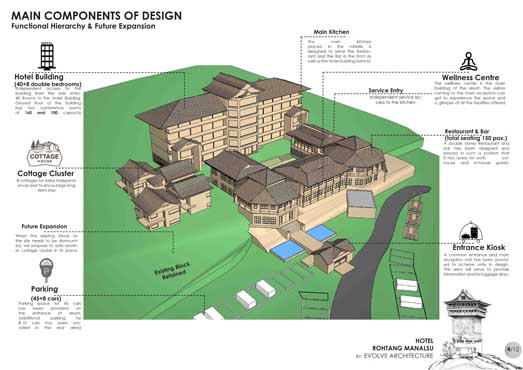
Landscape is treated as an integral architectural element, with entrance courts, central courtyards, sun decks, and forest-edge kiosks providing spaces for both social interaction and solitary retreat. Passive design strategies, including orientation, shaded walkways, deep balconies, and thermal mass, respond to Manali’s cold climate while reducing energy dependence. Universal accessibility is seamlessly integrated throughout the site, ensuring inclusivity at every level.
Overall, the project aspires to create a holistic wellness destination
where architecture acts as a mediator between nature, tradition, and
contemporary luxury, offering visitors a deeply restorative and immersive
experience rooted in place.